
An Air India Airbus A320 experienced a near-simultaneous loss of all three hydraulic systems mid-flight, causing an altitude upset and injuring 24 people. A preliminary investigation revealed the pilot-in-command tested positive for a psychoactive substance post-flight, leading to their termination, while the technical aspects of the incident are still under scrutiny.

Moody's Ratings has sharply increased India's GDP growth forecast for fiscal 2026-27 to 7 per cent, making it the fastest among G20 economies, driven by economic resilience despite the Middle East conflict. However, the agency flagged significant inflation risks stemming from elevated oil prices and potential El Nino disruptions.

A new study reveals that approximately 70 per cent of the year-to-year variation in winter air pollution across northern India can be explained by the frequency of western disturbances. These storm systems, originating from the Mediterranean, help clear pollution through precipitation and ventilation. The findings suggest that predicting the frequency of these disturbances could provide advance warning of severe pollution, allowing for better preparedness and implementation of control measures.

Indian benchmark stock indices, Sensex and Nifty, experienced a significant decline for the third consecutive day, with the Sensex tumbling 1,092 points and Nifty closing below 24,550. This downturn was primarily driven by the India Meteorological Department's forecast of a below-normal southwest monsoon and ongoing geopolitical uncertainties surrounding the US-Iran ceasefire arrangement.

Heavy rainfall in Delhi led to widespread waterlogging and severe traffic congestion, bringing the national capital to a standstill, with the India Meteorological Department issuing a red alert for further heavy rain.

Indian golfer Yuvraj Sandhu is the sole representative from India at the KLM Open this week, facing a challenging debut season on the DP World Tour despite his positive outlook.

'Nobody asked us to work on this. It was on our own that we decided to embark on this journey.'

Economists widely anticipate the Reserve Bank of India's Monetary Policy Committee will increase the repo rate by 50 basis points, likely split between the October and December meetings, as retail inflation is projected to peak at 6.1 per cent in the third quarter, exceeding the RBI's tolerance limit.

Organisers of the Asian Games in Nagoya are actively addressing complaints regarding athlete accommodation, including issues with bed sizes in container huts and cabin sizes on the newly docked cruise ship, Costa Serena, which will house 4,000 participants.

'During the hot season (April to June), above-normal minimum temperatures are likely over most parts of the country, except in some regions of Maharashtra and Telangana, where minimum temperatures are expected to be normal to below normal,' IMD said.

Indian captain Suryakumar Yadav says the team is focused on preparing for their T20 World Cup clash with Pakistan despite concerns about potential rain disruptions.


Sri Lanka meteorological department predicts better weather in coming days
While light rain has been forecast for Monday, the Met office has predicted showers on the final day of the Test.

The death toll from devastating flash floods in Nepal has surged to 1,050, with nearly 4,000 people, including foreigners and security personnel, still missing. Rescuers are struggling with intermittent rainfall, rising river levels, and difficult terrain, while expert teams from India and China assist in operations, particularly at hydropower project sites where many workers are believed to be trapped in tunnels.

Make the most of the monsoon with these hatke experiences.

The Indian National Centre for Ocean Information Services (INCOIS) has issued a swell surge warning for coastal areas of Kerala, south Tamil Nadu, and Lakshadweep islands for August 19-20. High period swells from the southern Indian Ocean are expected to cause surging waves and inundation in low-lying regions, prompting advisories for fishermen and coastal residents to exercise caution and suspend recreational activities.

Generative artificial intelligence (AI) is beginning to alter hiring patterns in South Asia, with multinational companies (MNCs) and firms integrated into global value chains (GVCs) reducing recruitment more sharply than domestic firms, signalling the technology's early impact on the region's export-oriented services sector, according to the World Bank's World Development Report 2026.

The India Meteorological Department (IMD) has issued an orange alert for Mumbai, predicting heavy to very heavy rainfall, thunderstorms, lightning, and gusty winds for the next few days. The forecast extends through Friday, with a brief yellow alert on Tuesday. Neighbouring Palghar is under a red alert, and Raigad is under an orange alert for five days.

A landslide in Maval tehsil, Pune district, has buried a house, with three family members feared trapped. Rescue operations are underway by NDRF and police, while heavy rainfall has also caused waterlogging and partial closure of the Mumbai-Pune Expressway.

Persistent rain limited play to fewer than 10 overs on Day 3 at Lord's, but Ollie Robinson struck twice to leave New Zealand struggling at 55/5 in pursuit of a 254-run target against England

The India Meteorological Department has forecast intensified heavy rains and thunderstorms for Mumbai and its suburbs. A yellow alert has been issued, and high tides are expected, though traffic and public transport are currently normal.

Maharashtra Chief Minister Devendra Fadnavis has warned of a possible cloudburst-like spell in Nashik on Tuesday and stated that the state machinery is on high alert, with heavy rains expected to continue until July 8. Citizens are urged to avoid unnecessary travel as authorities manage landslides, swollen rivers, and rescue operations.

The India Meteorological Department has issued a red alert for Mumbai, Thane, Palghar, and Raigad districts for Saturday and Sunday, forecasting extremely heavy rainfall. Mumbai has already experienced significant rainfall this week, and the alert indicates continued severe weather conditions, potentially disrupting normal life.

The IMD has fancy weather-monitoring radars in the name of providing better forecasts.

'PowerBank-50 is now space proven, made in India, and ready for every satellite builder in the world.'

As India and England gear up for the first Test at Headingley on June 20, all eyes won't just be on the players, but on the sky.

India vice-captain KL Rahul revealed that the team's aggressive approach in the Galle Test against Sri Lanka was driven by the knowledge of an impending heavy shower, which arrived just five minutes after their 165-run victory.

The Asian Development Bank (ADB) has revised down India's GDP growth forecast for fiscal year 2026-27 (FY27) to 6.6 per cent from an earlier 6.9 per cent, primarily attributing the change to elevated energy prices stemming from the Middle East conflict. Despite this moderation, India is still expected to remain the world's fastest-growing major economy.
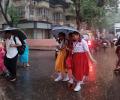
At least 19 people have died in Karachi, Pakistan, due to severe rainstorms, thunderstorms, and strong winds, causing building collapses and electrocution.

The administration has sounded a high alert in Maharajganj and Kushinagar districts of Uttar Pradesh, while stepping up the monitoring of the Gandak and other water bodies downstream of rivers in Nepal, following devastating flash floods in the neighbouring country that have killed more than 350 people and left thousands missing.

Given IMD's past record on forecasts, the latest one could also go wrong.

Bihar Chief Minister Samrat Choudhary has called upon ministers and legislators to extensively use digital technology and Artificial Intelligence (AI) for balanced development and improved public outreach. He highlighted the state government's existing use of AI in welfare programmes and project cost reduction, stressing its importance for Bihar's progress in the digital era.

Mumbai and Pune are grappling with severe monsoon weather, triggering an 'orange' alert, widespread disruptions, school closures, and tragic fatalities from landslides and wall collapses.

The India Meteorological Department (IMD) has predicted below normal monsoon rains for India this year, citing the potential emergence of El Nino conditions. This could significantly impact the country's agriculture-dependent economy.

FIFA is expected to keep the scheduled kickoff for Mexico's World Cup Round of 16 clash against England at the Estadio Azteca despite weather concerns, as the hosts prepare to defend their formidable home record.

The International Monetary Fund (IMF) has reduced India's growth forecast for FY27 to 6.4 per cent, citing the potential impact of higher energy prices offsetting the country's economic resilience. Despite this, India remains among the fastest-growing major economies.

From a few rain gauges in 1875 to rivalling the world's best weather agencies, the India Meteorological Department (IMD) has weathered its way to becoming a global leader in forecasting.

Typhoon Bavi made landfall in eastern China, leading to the evacuation of nearly 2 million people. Authorities issued red alerts for rainstorms and orange alerts for the typhoon, causing widespread cancellations of flights and ferry services, and the closure of tourist attractions.

The India Meteorological Department has issued a 'red' alert for Mumbai, Thane, and Raigad districts, forecasting heavy to very heavy rainfall and strong winds. Residents are advised to avoid unnecessary travel, and warnings include potential flash floods, structural damage, and disruptions to essential services. The Brihanmumbai Municipal Corporation has also urged caution and deployed officials to monitor the situation.
